
Manufacturing Robotics: Building the Future of Industry
Robots are playing a major role in the manufacturing industry by making production faster, safer, and more efficient. From assembling cars to packaging products, robotics is transforming how factories work around the world.


THIS IS HOW ROBOTS WORKS IN MANUFACTURING INDUSTRY
-
Automated Assembly Lines
Robots are used to assemble products with high speed and precision especially in industries like automotive, electronics, and machinery.
-
Material Handling and Packaging
Robots lift, move, and package heavy or delicate items, reducing worker injuries and speeding up processes.
-
Quality Control
Some robots have sensors and AI vision systems that detect product defects or errors more accurately than humans.

How Robotics Enhances Manufacturing
-
Robots help make manufacturing faster and more accurate. They can work all day without breaks and do tasks like assembling, welding, or packaging with great precision.
-
They also improve safety by doing dangerous or heavy work, reducing the risk of injuries. This allows human workers to focus on easier or more important tasks.
-
Robots are used in factories to speed up production and reduce errors. They can perform the same task over and over without getting tired, which makes the work more efficient.


Tesla’s Gigafactory uses hundreds of industrial robots to assemble electric vehicles. These robots work alongside humans to weld parts, install components, and test systems with high precision.
Real-World Example
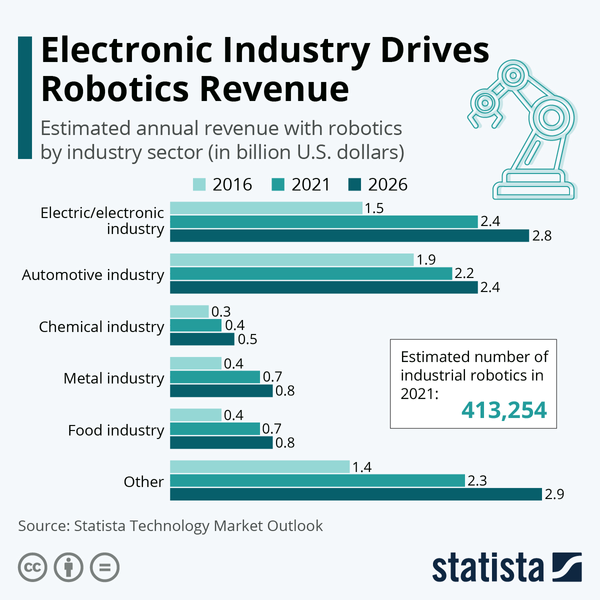
REAL LIFE EXAMPLE & CHART
Automotive factories use robotic arms for assembly, welding, and painting, significantly reducing production time and errors. Manufacturing robotics adoption continues to grow as companies seek higher efficiency and cost reduction.
Increased Productivity
- Robots can work faster and longer than humans, increasing output.
Benefits & Risks
Improved Quality and Accuracy
- Robots perform tasks with precision, reducing errors in the production line
Worker Safety
-
Dangerous or repetitive tasks can be done by robots, reducing workplace injuries.
Job Loss
- As robots take over tasks, some manufacturing jobs may be replaced or reduced.
High Initial Investment
- Buying and installing industrial robots can be extremely expensive.
Technical Failures
- If a robot malfunctions, it can shut down an entire production line.